Choosing the Best Shoes for Retail Workers

Retail workers spend long hours standing and walking, making proper footwear essential for comfort and foot health. Block heel pumps offer stability and better weight distribution compared to narrow heels, helping reduce strain on the feet and legs. Arch support flats provide cushioning and structural support, which can ease fatigue and help prevent common problems such as heel pain and arch discomfort. Additionally, knit heels allow flexibility and breathability, adapting to foot movement while reducing pressure and irritation. The right shoes support posture, improve balance, and lower the risk of overuse injuries during long shifts. A podiatrist can evaluate foot structure, recommend supportive shoe styles, and suggest custom orthotics, if needed. If foot pain or fatigue affects your workday, it is suggested that you consult a podiatrist who can treat various foot conditions, and guide you on appropriate shoes to wear for your job.

While working on the feet, it is important to take the proper care of them. For more information about working on your feet, contact one of our podiatrists from Nassau Foot & Ankle. Our doctors will treat your foot and ankle needs.

Working on Your Feet

Standing on your feet for long periods of time can cause stress and pain in your feet. Your whole body may experience change in terms of posture, back pain, bunions, callouses and or plantar warts. There are ways to avoid these conditions with proper foot care, smart choices and correct posture.

Positive Changes

Negative heeled shoe – Choosing this shoe type places the heel slightly lower than the ball of the foot. These are great for overall foot health. Find shoes that fit you correctly.

Go barefoot – Our feet were not designed to be enclosed for all hours of the day. Try to periodically expose your feet to air.

Eliminate Pain

Foot Exercises – Performing simple exercises, incorporating yoga and doing stretches are beneficial. This will allow increased blood flow to the area and muscles of the foot.

Achilles tendon – Stretching the foot out flat on the floor will relax the calf muscles and tendon. These exercises can be performed almost anywhere. Make sure you add these exercises to your daily regimen. 

With a little bit of this information and knowing more about foot health, you will notice changes. Foot stretches and proper footwear will help with pain and prevent further issues.

If you have any questions please contact our offices located in Oceanside, Franklin Square, and East Norwich, NY . We offer the newest diagnostic and treatment technologies for all your foot and ankle needs.

Read more about How to Handle a Long Work Day on Your Feet

Understanding Impact-Biomechanics and Shoe Design

Many people wonder whether running shoes are suitable for walking, and the answer depends on impact-biomechanics and shoe design. Walking and running place different forces on the feet, which is why footwear is designed differently for each activity. Running shoes often have greater cushioning to absorb higher impact, while walking shoes emphasize steady support and flexibility. Differences such as heel drop, sole stiffness, and upper construction affect comfort and performance. A higher heel drop may feel unstable for walking, and increased sole stiffness can limit natural foot motion. Upper construction also varies, influencing breathability and fit during longer wear. A podiatrist can assess arch type, gait pattern, and activity needs to determine whether running shoes are appropriate for walking, or if a specific walking shoe is better. If you have foot pain or fatigue, it is suggested that you schedule a visit with a podiatrist for personalized advice and guidance on proper shoe selection.

For more information about walking shoes versus running shoes, consult with one of our podiatrists from Nassau Foot & Ankle. Our doctors can measure your feet to determine what your needs are and help you find an appropriate pair of footwear.

Foot Health: The Differences between Walking & Running Shoes

There are great ways to stay in shape: running and walking are two great exercises to a healthy lifestyle. It is important to know that running shoes and walking shoes are not interchangeable. There is a key difference on how the feet hit the ground when someone is running or walking. This is why one should be aware that a shoe is designed differently for each activity.

You may be asking yourself what the real differences are between walking and running shoes and the answers may shock you.

Differences

Walking doesn’t involve as much stress or impact on the feet as running does. However, this doesn’t mean that you should be any less prepared. When you’re walking, you land on your heels and have your foot roll forward. This rolling motion requires additional support to the feet.

Flexibility – Walking shoes are designed to have soft, flexible soles. This allows the walker to push off easily with each step.

If you have any questions, please feel free to contact our offices located in Oceanside, Franklin Square, and East Norwich, NY . We offer the newest diagnostic and treatment technologies for all your foot care needs.

Read more about Walking Shoes vs. Running Shoes

Types of Ankle Fractures

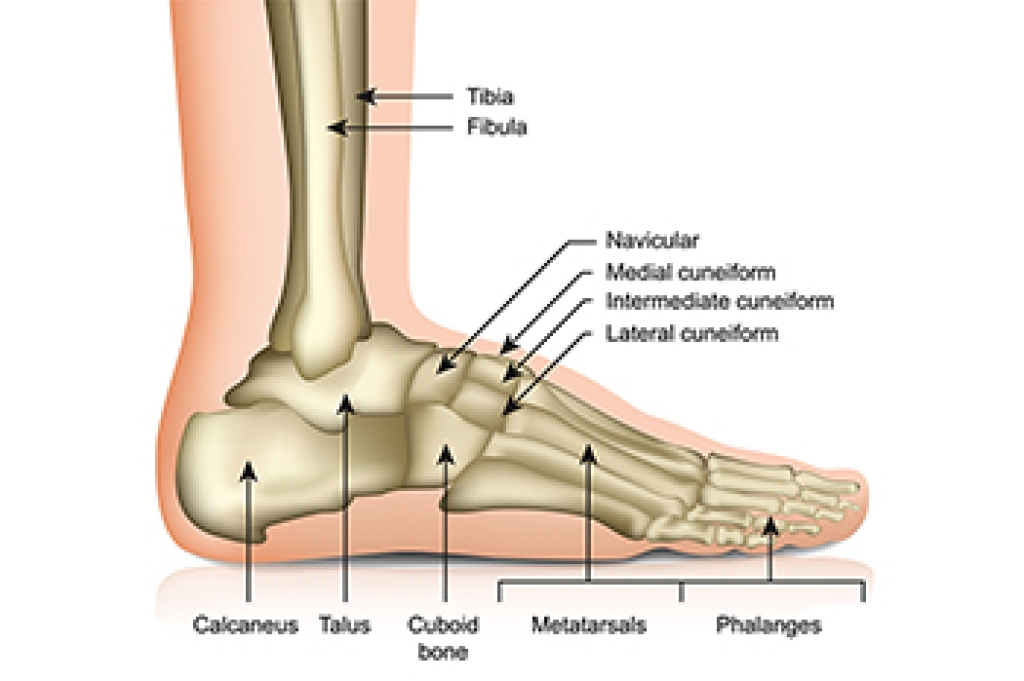
Ankle fractures involve breaks in the bones that form the ankle joint. This includes the tibia and fibula, which are leg bones that meet at the talus, which supports the foot as it moves up and down. Some injuries also affect the back or inner edges of the tibia, known as the posterior and medial malleolus. These fractures typically occur when the ankle twists inward or outward, but they can also result from falling, missing a step, or landing awkwardly in worn-out shoes with inadequate support or while wearing flip-flops. Stable fractures keep the joint aligned, while unstable fractures cause the talus to shift, raising the risk of long-term pain and arthritis. A podiatrist can assess bone position, review imaging, and determine whether the ankle can heal with protection or if surgery is needed to regain alignment. If you believe you have fractured an ankle bone, it is suggested that you make an appointment with a podiatrist for an exam and treatment.

Broken ankles need immediate treatment. If you are seeking treatment, contact one of our podiatrists from Nassau Foot & Ankle. Our doctors can provide the care you need to keep you pain-free and on your feet. 

Broken Ankles
A broken ankle is experienced when a person fractures their tibia or fibula in the lower leg and ankle area. Both of these bones are attached at the bottom of the leg and combine to form what we know to be our ankle.

When a physician is referring to a break of the ankle, he or she is usually referring to a break in the area where the tibia and fibula are joined to create our ankle joint. Ankles are more prone to fractures because the ankle is an area that suffers a lot of pressure and stress. There are some obvious signs when a person experiences a fractured ankle, and the following symptoms may be present.

Symptoms of a Fractured Ankle

  • Excessive pain when the area is touched or when any pressure is placed on the ankle
  • Swelling around the area
  • Bruising of the area
  • Area appears to be deformed

If you suspect an ankle fracture, it is recommended to seek treatment as soon as possible. The sooner you have your podiatrist diagnose the fracture, the quicker you’ll be on the way towards recovery.

If you have any questions, please feel free to contact our offices located in Oceanside, Franklin Square, and East Norwich, NY . We offer the newest diagnostic and treatment technologies for all your foot care needs.

Read more about Broken Ankle Causes, Differences, Symptoms and Treatments

How Foot Bones Work Together During Walking

The bones of the foot work together in a complex and well-coordinated way during walking to support balance, movement, and shock-absorption. As the heel strikes the ground, rearfoot bones provide stability and weight-bearing support. During mid-stance, the midfoot bones help distribute pressure evenly across the arch, allowing smooth forward motion. At push-off, the forefoot bones create leverage and flexibility for efficient propulsion. Ligaments and muscles support these bones to maintain proper alignment and reduce stress on joints. When bone movement is altered, pain or injury may occur. A podiatrist can evaluate gait mechanics, identify structural concerns, and provide customized treatments such as orthotics and strengthening plans. If you have foot pain while walking, it is suggested that you consult a podiatrist who can treat various foot and ankle conditions.

If you have any concerns about your feet, contact one of our podiatrists from Nassau Foot & Ankle. Our doctors can provide the care you need to keep you pain-free and on your feet.

Biomechanics in Podiatry

Podiatric biomechanics is a particular sector of specialty podiatry with licensed practitioners who are trained to diagnose and treat conditions affecting the foot, ankle and lower leg. Biomechanics deals with the forces that act against the body, causing an interference with the biological structures. It focuses on the movement of the ankle, the foot and the forces that interact with them.

A History of Biomechanics

  • Biomechanics dates back to the BC era in Egypt where evidence of professional foot care has been recorded.
  • In 1974, biomechanics gained a higher profile from the studies of Merton Root, who claimed that by changing or controlling the forces between the ankle and the foot, corrections or conditions could be implemented to gain strength and coordination in the area.

Modern technological improvements are based on past theories and therapeutic processes that provide a better understanding of podiatric concepts for biomechanics. Computers can provide accurate information about the forces and patterns of the feet and lower legs.

Understanding biomechanics of the feet can help improve and eliminate pain, stopping further stress to the foot.

If you have any questions please feel free to contact our offices located in Oceanside, Franklin Square, and East Norwich, NY . We offer the newest diagnostic and treatment technologies for all your foot and ankle needs.

Read more about The Importance of Biomechanics in Podiatry

It's Time for Beautiful Feet

You don't need an excuse to have beautiful nails. Step outside without worrying about the appearance of your feet.

Connect With Us